
STOMPI
Let’s make this simple. Work through the lesson, then practise one step at a time. You do not need to guess; use the examples and checks as your guide.
What You Will Learn
You will build confidence with this topic by reading the explanation, checking the examples, and completing the related practice task.
STOMPI – What is it and how do we use it?


Let’s make this simple. Read the explanation first, then use the examples to check your understanding.
Edit lesson Edit page contents Grade essays Lesson is currently being previewed. Dismiss this notification Let's Dive In! Hallo, Graad 8's! Hello, Grade 8s! Are you ready for an exciting journey into the heart of Afrikaans sentence structure? Today, we're going to uncover a secret weapon that will help you master word order, making your sentences clear and correct.
Even though the sources don't explicitly name this secret weapon, the rules it represents are definitely hidden within your study notes. Let's dive in! STOMPI Video The STOMPI Secret! Have you ever wondered why words in Afrikaans sometimes seem to jump around in a sentence? Or why "tyd" (time) might come before "plek" (place)? Well, Afrikaans, like any language, has its own rules for how words should be arranged to make sense.
And to help you remember these rules, there's a fantastic, super helpful acronym called STOMPI! Now, a quick note before we begin: While the name "STOMPI" itself isn't directly mentioned in your study materials, the grammatical concepts it stands for, like the order of time, manner, and place adverbs, and the general structure of sentences, are all covered and tested in your sources.
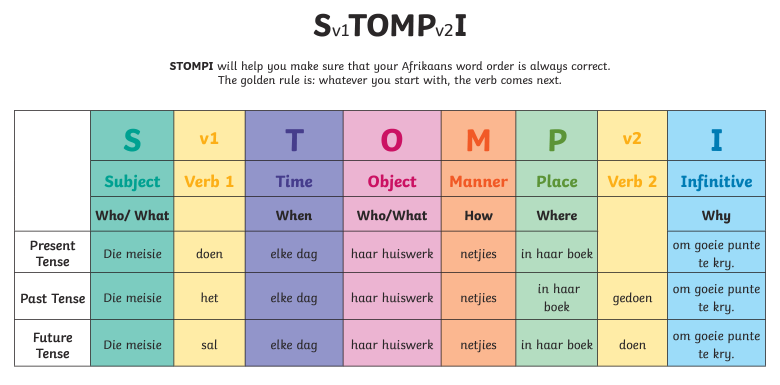
So, think of STOMPI as a clever shortcut to remember rules you already know or will learn! STOMPI helps you remember the standard word order in a simple main sentence in Afrikaans. Each letter stands for a different part of the sentence: S – Subjek (Subject) T – Tyd (Time) O – (Indirekte) Objek (Indirect Object) M – Manier (Manner) P – Plek (Place) I – Infinitief / Werkwoordgroep (Infinitive / Verb Phrase) Let's break down each part with some examples to make it super clear and fun!
S – Subjek (Subject) This is the 'who' or 'what' that performs the action in the sentence. In a standard main clause, the subject usually comes right after the verb if the sentence starts with something else, or at the very beginning. Voorbeeld: Ek speel krieket. (I play cricket.) [Subject: Ek] Gister het Quintin goed muurbal gespeel. (Yesterday Quintin played squash well.) [Subject: Quintin] T – Tyd (Time) This tells us 'when' something happens.
Remember, your sources explicitly state that when you have multiple adverbs, Tyd comes first. Voorbeeld: Ek speel krieket elke dag. (I play cricket every day.) Gister het Quintin goed muurbal gespeel. (Yesterday Quintin played squash well.) [Time: Gister] Volgende jaar sal meneer Koen lief daarvoor wees om koek te eet. (Next year Mr. Koen will love to eat cake.) [Time: Volgende jaar] O – (Indirekte) Objek (Indirect Object) This is often the 'to whom' or 'for whom' the action is done.
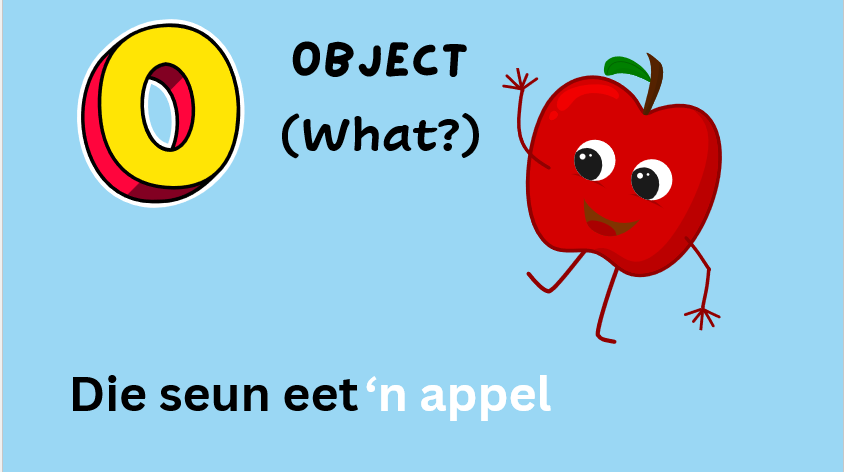
It’s not always present in every sentence. Voorbeeld: Ek gee vir my vriend 'n present. (I give my friend a present.) [Indirect Object: vir my vriend] My ouma het 'n present gegee. (My grandmother gave a present.) [1.10] Jy gee vir hulle baie presente. (You give them many gifts.) [Indirect Object: vir hulle] M – Manier (Manner) This tells us 'how' something is done.
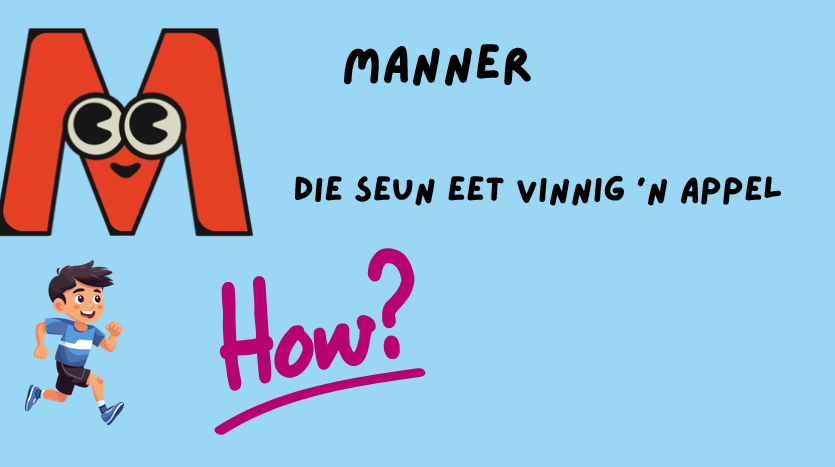
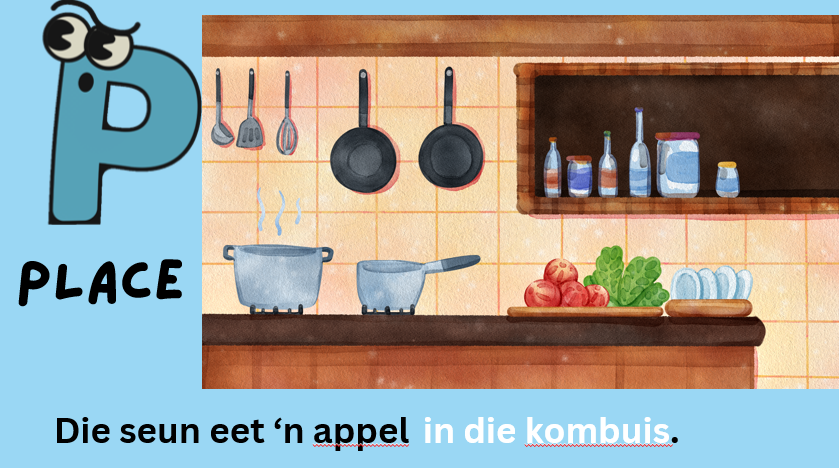
Your sources mention Bywoorde van Wyse (Adverbs of Manner) and how they answer the question "hoe?" (how?). Voorbeeld: Ek speel krieket elke dag met groot entoesiasme. (I play cricket every day with great enthusiasm.) Gister het Quintin goed muurbal gespeel. (Yesterday Quintin played squash well.) [Manner: goed] Die vrou het hard gelag. (The woman laughed loudly.) [Manner: hard] P – Plek (Place) This tells us 'where' something happens.
Your sources discuss Bywoorde van Plek (Adverbs of Place) and how they answer the question "waar?" (where?). Voorbeeld: Ek speel krieket elke dag met groot entoesiasme op die veld. (I play cricket every day with great enthusiasm on the field.) In die verlede het Mike baie in die klas gepraat. (In the past Mike spoke a lot in class.) [Place: in die klas] Spud se skool, Michaelhouse, is in KwaZulu-Natal.
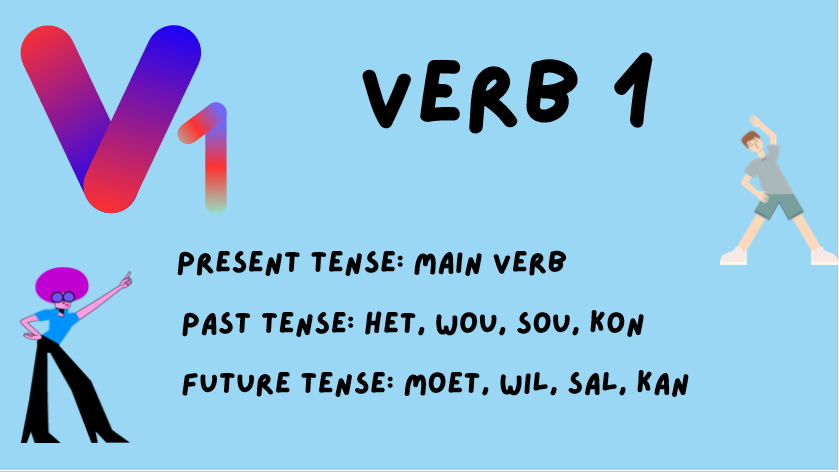
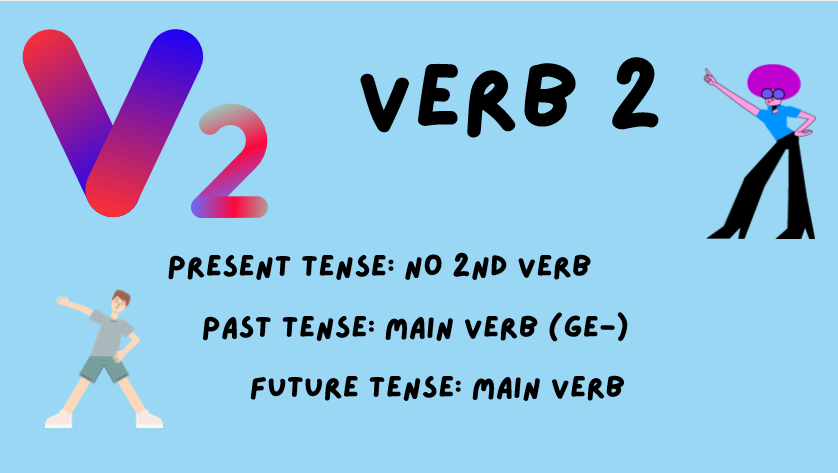
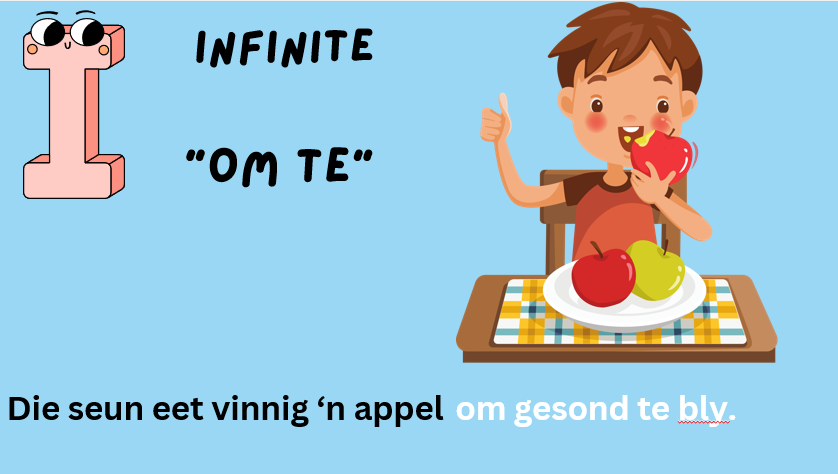
(Spud's school, Michaelhouse, is in KwaZulu-Natal.) [Place: in KwaZulu-Natal] I – Infinitief / Werkwoordgroep (Infinitive / Verb Phrase) This refers to any extra verbs or verb parts that might appear towards the end of the sentence. This includes infinitives (om te + verb) or the second part of a compound verb in a main clause. Voorbeeld: Ek wil krieket speel.
Quick practice
Choose three examples and explain why each answer works. Practise one step at a time.